
About CBD
WHAT IT IS. WHAT IT DOES. WHAT IT DOESN'T.
The science, in plain English. No overclaiming. No hiding either.
THE BASICS
WHAT CBD ACTUALLY IS.
CBD - cannabidiol - is a naturally occurring compound found in the hemp plant. It is one of over 100 cannabinoids identified in cannabis, and the second most abundant after THC.
Unlike THC, CBD is non-psychoactive. It will not get you high. It interacts with the body's endocannabinoid system - a biological regulatory network present in every human being - without producing any intoxicating effect.
In the UK, CBD products are classified as food supplements. All products must contain less than 0.2% THC to be legal. Everything we sell is independently tested and confirmed compliant.
- Non-psychoactive. CBD does not produce a high. It is not the compound in cannabis responsible for intoxication - that is THC.
- Naturally occurring. Extracted directly from the hemp plant. Not synthesised in a laboratory.
- UK legal. All products containing less than 0.2% THC are legal in the UK. CBD is classified as a food supplement.
- The same molecule studied as medicine. A CBD-derived prescription medicine, Epidyolex, is licensed in the UK for certain rare forms of epilepsy. That's a regulated medicine prescribed by a specialist; our products are food supplements and make no medical claims.
THE DIFFERENCE
CBD VS THC. NOT THE SAME THING.
They come from the same plant family. They are not the same compound. This is the single most common point of confusion - and the most important one to get right.
| CBD - Cannabidiol | THC - Tetrahydrocannabinol | |
|---|---|---|
| Psychoactive | No | Yes - produces a high |
| Legal in UK | Yes - food supplement | Controlled substance |
| Drug test risk | CBD itself does not trigger a test - trace THC in poor quality products might | Yes - screened for in standard tests |
| How it works | Modulates the endocannabinoid system indirectly - no direct receptor binding | Binds directly to CB1 receptors - produces intoxication |
| In our products | Present - the active ingredient | <0.2% - below legal limit, independently verified |
Our extracts come in full and broad spectrum: full spectrum keeps the whole cannabinoid profile including a legal trace of THC, broad spectrum has the THC removed to below detectable levels. Every batch is independently lab-tested, with the full cannabinoid breakdown on every product page.
THE RESEARCH
WHAT THE STUDIES ACTUALLY SHOW.
This is peer-reviewed research - not marketing. We present it accurately, including where findings are mixed or more work is needed. We don't cherry-pick. We don't overclaim.
ANXIETY
WELL-STUDIED. ACTIVELY RESEARCHED.
A 2024 meta-analysis pooled data from 316 participants across multiple trials, examining how CBD doses affected anxiety scores. A separate open-label pilot at Harvard's McLean Hospital measured anxiety, mood, and sleep-quality scores in participants taking around 30mg per day over four weeks - a notably lower dose than earlier research had used.
−0.92 effect size
Hedges' g - a measure used in clinical research, where values above −0.8 are conventionally described as a large effect size.
Results may vary. CBD is a food supplement - not a treatment for anxiety disorders. Consult your doctor.
SLEEP
LARGE TRIALS. ACTIVE REVIEW.
A 1,793-person double-blind RCT - one of the largest CBD trials conducted to date - measured changes in sleep-disturbance scores. A Mayo Clinic systematic review then assessed 34 separate studies of CBD and sleep, recording how each measured insomnia outcomes and where the evidence sat.
34 / 34 studies
Across the 34 studies assessed in the Mayo Clinic review, every one recorded a measured change in insomnia outcomes in at least a portion of participants.
More research at consumer dose ranges is needed. Results may vary.
PAIN & INFLAMMATION
DOCUMENTED MECHANISM.
CBD interacts with CB2 receptors in immune tissue and TRPV1 receptors involved in pain signalling. A 2024 systematic review screening over 500 articles examined CBD's role across pain and inflammation research.
CB2 and TRPV1 pathways
CB2 and TRPV1 are two of the main receptor sites researchers look at when studying how CBD interacts with pain and inflammation pathways in the body.
CBD cannot be claimed to treat pain. Results may vary. This is not medical advice.
The honest bit: The research is promising and growing - but more large-scale, long-term human trials at consumer dose ranges are needed before definitive conclusions can be drawn. We tell you what the evidence shows. We also tell you where it's incomplete. You deserve both.
THE ENDOCANNABINOID SYSTEM
YOUR BODY WAS BUILT FOR THIS.
The endocannabinoid system (ECS) is a biological network present in every human body. It was discovered in the early 1990s - largely because scientists were trying to understand how cannabis compounds interact with the body. What they found was a previously unknown regulatory system that plays a central role in maintaining physiological balance.
The ECS doesn't exist because of cannabis. It exists because the human body produces its own cannabinoids - called endocannabinoids - and needs a system to process them. CBD works by supporting and modulating this system, rather than overriding it.
CBD is a plant compound that works with a system your body already has.
8,000 BCE
Hemp cultivated in China - one of the earliest recorded agricultural crops. Used for fibre, food, and medicine.
2,700 BCE
Hemp documented in Chinese pharmacopeia as a treatment for pain, inflammation, and poor sleep.
1940
CBD first isolated from the hemp plant by American chemist Roger Adams.
1992
The endocannabinoid system discovered. Scientists find that the human body produces its own cannabinoids and has a dedicated system to process them - the same system CBD interacts with.
2018–present
Research accelerates. Hundreds of peer-reviewed studies into CBD's effects on sleep, anxiety, inflammation, and pain. The first CBD-derived pharmaceutical (Epidiolex) approved by the FDA for epilepsy treatment.
HOW IT WORKS.
The ECS has two primary receptor types - CB1 and CB2 - distributed throughout the brain and body. CBD doesn't bind directly to these receptors the way THC does. Instead, it works by influencing how the system regulates itself - slowing the breakdown of the body's own endocannabinoids, and interacting with several other receptor systems involved in stress, inflammation, and sleep.
CB1 receptors are concentrated in the brain and central nervous system - particularly in areas involved in memory, coordination, pain perception, and mood. They are the receptors THC binds to directly, producing its psychoactive effect. CBD does not bind to CB1 receptors in the same way. Instead, it acts as a modulator - influencing how the receptor responds to other signals without triggering intoxication.
CB2 receptors are found primarily in immune tissue - the spleen, tonsils, and throughout the peripheral nervous system. They play a key role in regulating inflammation and immune response. CBD interacts with CB2 receptors more directly than CB1, which is one of the reasons researchers study how it interacts with inflammation pathways. Activating CB2 receptors tends to reduce inflammatory signalling rather than amplify it.
CBD has a documented interaction with 5-HT1A serotonin receptors. At sufficient doses, research describes CBD as a partial agonist at 5-HT1A, meaning it binds to the receptor and influences serotonin signalling. This is one of the receptor interactions most studied in the wider research into CBD, mood and sleep, and it remains an active area of investigation. Serotonin is also a precursor to melatonin, which is why the 5-HT1A pathway is of interest to sleep researchers.
TRPV1, sometimes called the capsaicin receptor, is involved in transmitting pain signals, regulating body temperature, and mediating inflammation. Research describes CBD as binding to and activating TRPV1 receptors, which over time can desensitise them. Because TRPV1 sits at the intersection of pain and inflammation signalling, it is one of the more closely studied receptor sites in CBD research, and an active area of ongoing investigation.
THE BIGGER PICTURE
CBD interacts with biological pathways involved in sleep, anxiety, inflammation, and pain signalling. These are pathways the body already uses every day, regulated by the endocannabinoid system.
CBD is a food supplement, not a medicine. We cannot claim CBD treats, cures or prevents any condition. Results may vary. This is not medical advice. Consult your doctor before use if you take medication or have a health condition - particularly if you take medication affecting serotonin levels or anti-inflammatories.
FIND YOUR FORMAT
READY TO TRY IT?
Different formats work differently. Choose the one that fits your routine.
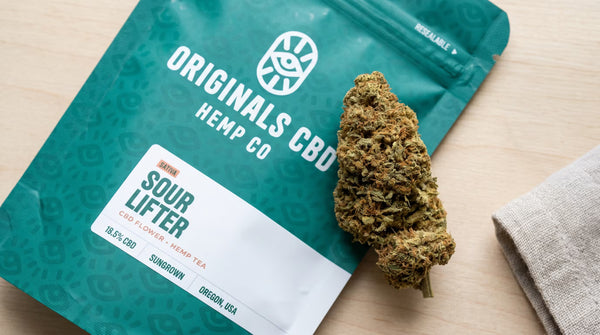
Hemp Tea
Whole flower, brewed.
Strain-named CBD flower, made to be brewed as a warm herbal tea with a full terpene profile.
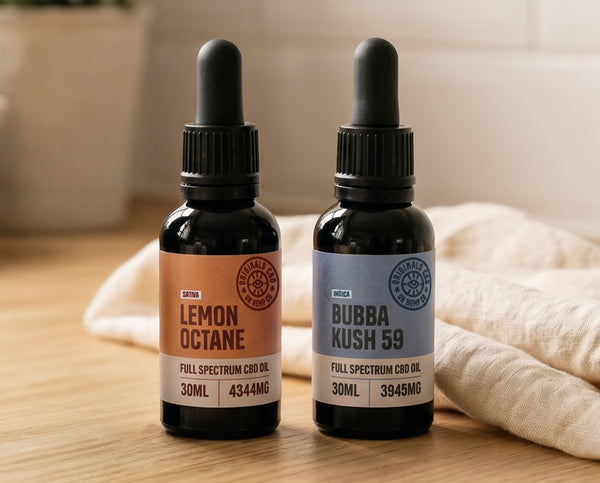
CBD Oil
Drops, your way.
A few drops under the tongue, broad and full-spectrum oils with the cannabinoid breakdown listed.
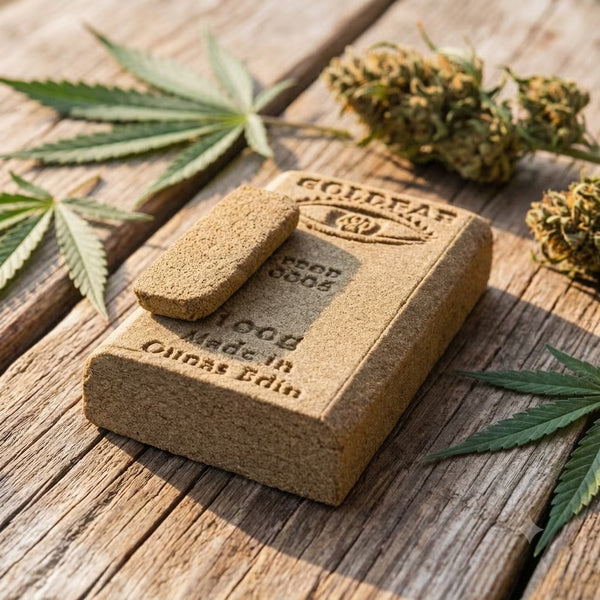
CBD Hash
Pressed and traditional.
Concentrated, hand-pressed hash made from the resin of the hemp plant, with its genetics named.
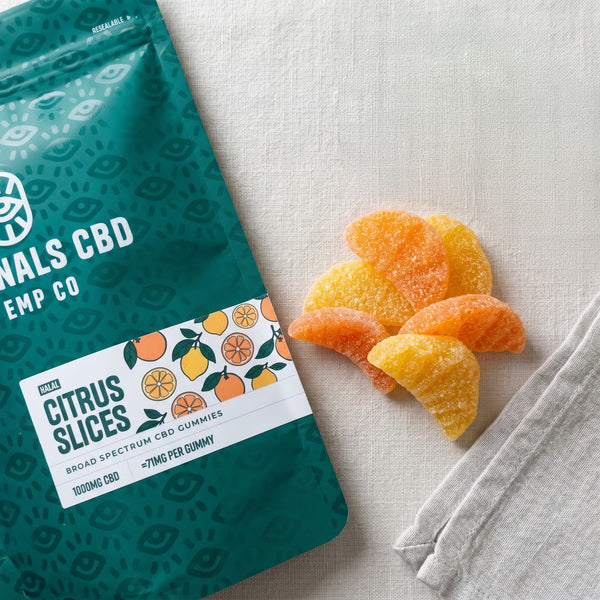
CBD Gummies
Measured and easy.
Pre-measured fruit gummies, a tidy way to take a set serving with no dropper or kit.